L3 Probability Concepts
Question Bank
A conservation trust on the Kāpiti Coast has 150 volunteers. The Venn diagram shows how many of them helped with tree planting, weeding and beach clean-ups last year.
(a) Calculate the probability that a randomly chosen volunteer helped with exactly two of these three activities.
(b) A volunteer is chosen at random from those who helped with weeding. What is the probability that this volunteer helped with weeding only?
A fitness app looked at what its 1500 users in Hamilton recorded during March:
- 900 users logged at least one run
- 240 users logged at least one swim
- 180 users logged both a run and a swim.
(a) A user is chosen at random and is known to have logged a swim. What is the probability that this user also logged a run?
(b) Calculate the proportion of these 1500 users who logged neither a run nor a swim in March.
A garden centre in Palmerston North asked 250 of its customers which of three vegetables they grew last summer: tomatoes, courgettes and beans. The survey found that:
- 132 customers grew tomatoes
- 68 grew courgettes
- 44 grew beans
- 30 grew tomatoes and courgettes
- 20 grew tomatoes and beans
- 18 grew courgettes and beans
- 8 grew all three.
One of these 250 customers is chosen at random.
(a) Calculate the probability that this customer grew none of the three vegetables.
(b) Calculate the probability that this customer grew courgettes but not tomatoes.
A school asked its 180 Year 13 students what they do outside school hours. The survey found that:
- 72 students have a part-time job
- 95 students play a sport
- 40 students learn a musical instrument
- 30 students have a part-time job and play a sport
- 12 students have a part-time job and learn an instrument
- 18 students play a sport and learn an instrument
- 6 students do all three.
Estimate the probability that a randomly chosen Year 13 student from this school does exactly one of these three activities.
A farmers' market asked 200 visitors whether they bought fresh produce (fruit or vegetables) and whether they bought something from a food stall. It found that:
- 64 visitors bought only fresh produce
- 24 visitors bought only from a food stall
- 56 visitors bought neither.
(a) The organisers claim that more than half of the visitors bought fresh produce. Does the data support this claim?
(b) A stallholder claims that most of the visitors who bought fresh produce also bought something from a food stall. Does the data support this claim?
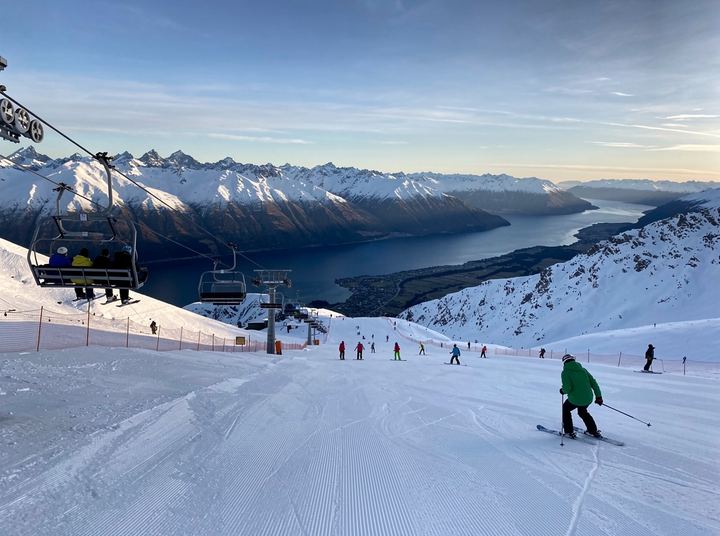
Records from a ski field near Wānaka show that, on a typical Saturday:
- 45% of visitors hire gear (skis or a snowboard)
- 60% hire gear or take a lesson, or both
- 20% hire gear and take a lesson.
(a) Calculate the probability that a randomly chosen Saturday visitor takes a lesson.
(b) The ski field expects 1200 visitors next Saturday. Approximately how many of them would you expect to hire gear or take a lesson, but not both?
An adventure park in Rotorua asked 200 visitors which of its three rides they went on: the giant swing, the luge and the zipline. The survey found that:
- 140 visitors went on the giant swing
- 106 rode the luge
- 30 rode the zipline
- 78 went on the giant swing and the luge
- 18 went on the giant swing and the zipline
- 14 rode the luge and the zipline
- 10 went on all three rides.
The park expects 3000 visitors over the Easter weekend. Approximately how many of them would you expect to go on at least two of the three rides?
A survey of households in a Taranaki town found that 62% have a dog, 35% have a cat, and 18% have neither a dog nor a cat.
A household that has a cat is chosen at random.
Calculate the probability that this household also has a dog.
A conservation group in a Dunedin suburb asked 200 households which of three native birds visited their garden during one week. The results were:
- 120 households saw tūī
- 64 saw kererū
- 90 saw pīwakawaka (fantails)
- 40 saw tūī and kererū (including those that saw all three)
- 56 saw tūī and fantails (including those that saw all three)
- 24 saw kererū and fantails (including those that saw all three)
- 16 saw all three.
A household is chosen at random from those that saw kererū. Calculate the probability that this household saw tūī and kererū, but not fantails.
A florist looked at the 120 posts on its social media page last year:
- 80 of the posts had a video
- 42 of the posts got 50 or more likes
- 32 of the posts had a video and got 50 or more likes.
The florist claims that a post with a video is more than twice as likely to get 50 or more likes as a post without a video.
Does this data support the claim? Use calculations and statistical reasoning to support your answer.
A district council asked 400 residents which new projects it should fund: a cycleway, a skate park or a dog park. Each resident could vote for up to TWO of the three projects. The results showed that:
- 360 residents voted for at least one project
- 90 voted only for the cycleway
- 60 voted only for the skate park
- 50 voted only for the dog park
- 70 voted for both the cycleway and the skate park
- nobody voted for both the skate park and the dog park.
Calculate the proportion of these 400 residents who voted for the cycleway.
A survey of international visitors to the South Island last summer asked which of three places they visited: Milford Sound, Aoraki/Mount Cook and Franz Josef Glacier. It found that:
- 10% visited all three
- 26% visited only Milford Sound
- 5% visited only Aoraki/Mount Cook
- 4% visited only Franz Josef Glacier
- 20% visited Milford Sound and Aoraki/Mount Cook (including those who visited all three)
- 18% visited Milford Sound and Franz Josef Glacier (including those who visited all three)
- 35% visited Aoraki/Mount Cook and Franz Josef Glacier (including those who visited all three).
Next summer, about 5000 international visitors are expected to visit Aoraki/Mount Cook. Approximately how many of these 5000 would you expect to also visit Milford Sound?
A used-car dealer in Whangārei had 40 cars for sale. The dealer recorded which of three features each car had: Bluetooth, cruise control and a reversing camera. It found that:
- 24 cars had Bluetooth
- 21 had cruise control
- 8 had a reversing camera
- 12 had both Bluetooth and cruise control
- a quarter of these 12 cars also had a reversing camera
- 2 had only a reversing camera
- 1 had cruise control and a reversing camera, but no Bluetooth.
(a) How many of the cars had all three features?
(b) Calculate the proportion of the 40 cars that had only one of the three features.
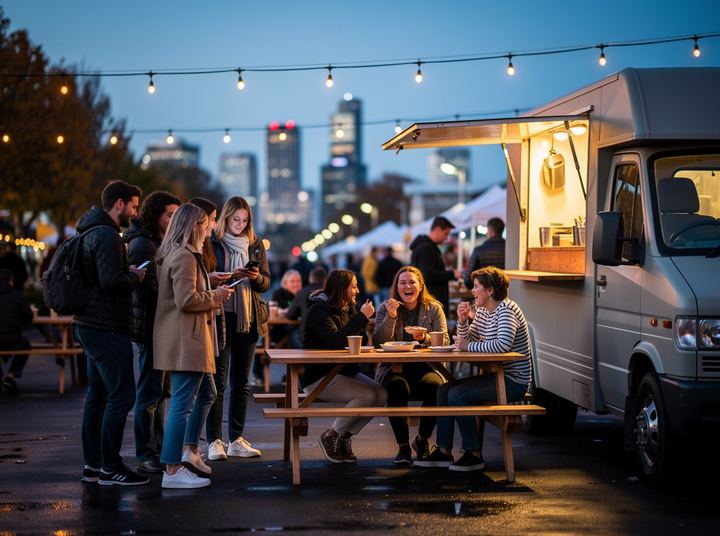
A food truck in Christchurch recorded what was in each of its 200 orders one Saturday. It found that:
- 120 orders included a burger
- 96 included fries
- 62 included a drink
- 24 included all three (a burger, fries and a drink)
- 48 included a burger and fries, but no drink
- 12 included a burger and a drink, but no fries
- 10 included fries and a drink, but no burger.
(a) Calculate the probability that a randomly chosen order from that Saturday included exactly one of these three items.
(b) The owner claims that orders with a burger are twice as likely to include fries as to include a drink.
Does the data support the owner's claim? Use calculations and statistical reasoning to support your answer.
An online gift shop in Auckland looked at 300 of its Mother's Day orders. It found that:
- 150 orders included flowers
- 120 included chocolates
- 90 included a card
- 60 included both flowers and chocolates (with or without a card)
- 18 included all three (flowers, chocolates and a card)
- 27 included flowers and a card, but no chocolates
- 30 included chocolates and a card, but no flowers.
(a) One of these 300 orders is chosen at random. Calculate the probability that it included none of the three items.
(b) The shop's manager claims that orders with flowers are 50% more likely to include a card than orders with chocolates are.
Does the data support this claim? Use calculations and statistical reasoning to support your answer.