L3 Probability Concepts
Question Bank
A language-learning app has a free version and a paid version. Of the people who downloaded the app last year:
- 20% chose the paid version, and the rest chose the free version
- 80% of those who chose the paid version were still using the app a month later
- 25% of those who chose the free version were still using the app a month later.
Calculate the probability that a randomly chosen person who downloaded the app last year was still using it a month later.
A ten-pin bowling centre in Taranaki looked at its lane bookings over the school holidays. Two fifths of the bookings were for children's birthday parties, and the rest were other bookings.
Three quarters of the birthday-party bookings asked for bumpers (rails that stop the ball rolling into the gutter). One sixth of the other bookings asked for bumpers.
(a) The manager predicted that a quarter of all the bookings would be birthday-party bookings with bumpers. Was the manager correct? Support your answer with a calculation.
(b) Calculate the proportion of all the school-holiday bookings that asked for bumpers.
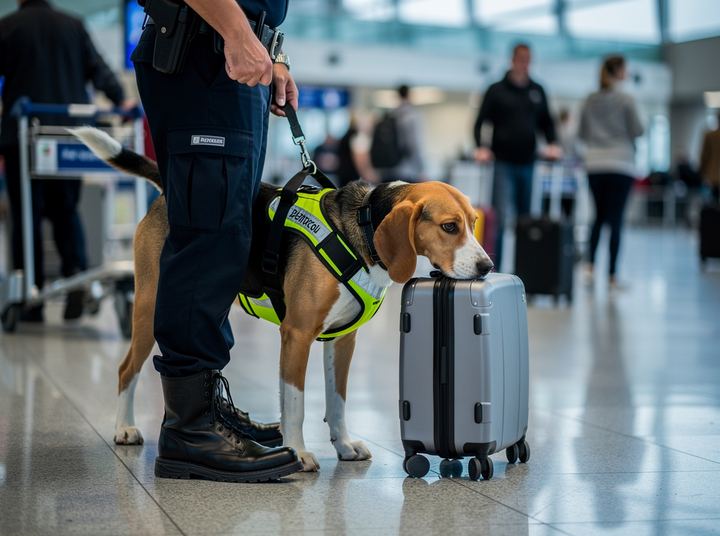
At an international airport, a biosecurity detector dog sniffs the bags of passengers who have declared that they are not carrying any food. When the dog smells food, it sits down beside the bag.
- 5% of these bags contain food.
- The dog sits beside 90% of the bags that contain food.
- A false positive is when the dog sits beside a bag with no food in it. The dog has a 2% false positive rate: it sits beside 2% of the bags that contain no food.
(a) The dog checks 500 of these bags from one flight. Approximately how many of these bags would you expect the dog to sit beside?
(b) Give ONE possible reason why a detector dog is not 100% accurate.
A fish and chip shop in Napier takes orders online, by phone and at the counter. Its records show that:
- 60% of orders are made online, 25% by phone and 15% at the counter
- a mistake is made in 2% of the online orders
- a mistake is made in 8% of the phone orders
- a mistake is made in 4% of the counter orders.
One week the shop takes 500 orders. Approximately how many of these orders would you expect to have a mistake?
A motel in Timaru takes bookings through travel websites, and directly from guests by phone. Its records show that:
- 40% of bookings are made through a travel website, and the rest are made directly
- of the guests who booked through a travel website, 25% leave an online review
- of the guests who booked directly, 15% leave an online review.
One of the motel's bookings is chosen at random.
(a) Calculate the probability that it was made through a travel website and the guest left an online review.
(b) Calculate the probability that it was made through a travel website or the guest left an online review (or both).
A bookshop offers free gift-wrapping. Its records show that:
- 25% of the books it sells are children's books
- 40% of the children's books it sells are gift-wrapped
- 20% of the other books it sells are gift-wrapped.
The owner thinks that one in three of the books the shop sells is gift-wrapped.
Does this information support the owner's view? Support your answer with calculations.

A glow-worm cave in Waitomo offers two tours: a guided walking tour and a black-water rafting tour. Its records for one month show that:
- 60% of the visitors went on the walking tour, and the rest went rafting
- 15% of all the visitors went on the walking tour and bought a souvenir photo.
(a) What proportion of the walking-tour visitors bought a souvenir photo?
(b) Of the rafting visitors, 40% bought a souvenir photo. Calculate the proportion of all the visitors that month who bought a souvenir photo.
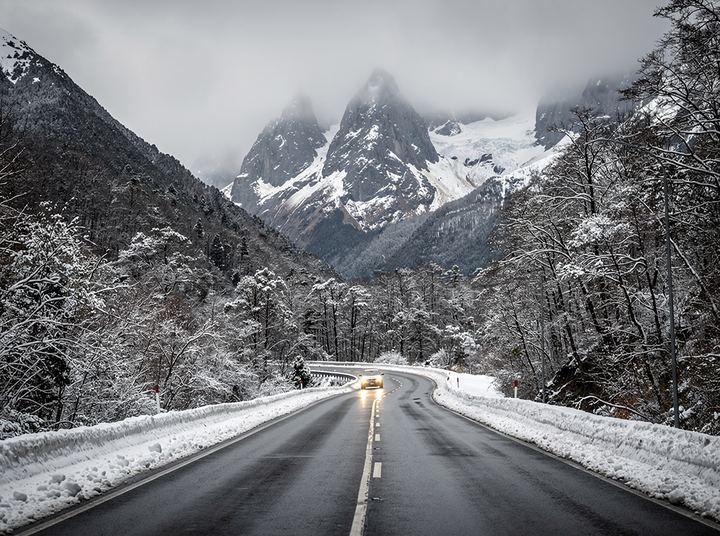
Records for a mountain pass road in the South Island show that, in winter:
- snow falls on the pass on 25% of days
- on days when snow falls, the road is closed on 40% of them
- on days with no snow, the road is closed on 4% of them (because of ice or slips).
Given that the road was closed on a winter day, calculate the probability that snow fell on the pass that day.
Kauri dieback is a disease that kills kauri trees. It spreads in soil, often on people's shoes. Rangers tried out a new on-site soil test, which gives a positive or negative result within minutes, on 400 soil samples from around kauri trees in a forest where the disease has been found. They also sent the same 400 samples to a laboratory, whose result is taken as correct.
The table shows the proportion of the 400 samples in each group.
| Laboratory result | |||
|---|---|---|---|
| Site test | Infected | Clean | Total |
| Positive | 0.40 | 0.02 | 0.42 |
| Negative | 0.10 | 0.48 | 0.58 |
| Total | 0.50 | 0.50 | 1.00 |
(a) Use the table to calculate the probabilities needed to complete the probability tree below. The first branches show the laboratory result, and the second branches show the site test result.
(b) The company that makes the site test claims that it "picks up at least 9 out of 10 infected samples, and gives a false positive (a positive result for a clean sample) for fewer than 1 in 20 clean samples".
Does this data support the company's claim?
A survey of households in a Tauranga suburb found that:
- 40% of the households have children living at home
- 36% of the households with children have a trampoline
- households with children are twice as likely to have a trampoline as households without children.
Estimate the probability that a randomly chosen household in this suburb has a trampoline.
A fruit shop keeps its punnets of strawberries either in a chiller or on an outside display. Last summer:
- 18 of the 360 punnets kept in the chiller went mouldy before they could be sold
- 18 of the 90 punnets kept on the outside display went mouldy before they could be sold.
(a) This summer the shop expects to stock 600 punnets: 400 in the chiller and 200 on the outside display. Using last summer's rates, approximately how many punnets would you expect to go mouldy?
(b) How many times as likely is it that a punnet on the outside display went mouldy, compared with a punnet in the chiller? Interpret your answer in context.
A council is trialling a camera system in a one-hour parking zone. The cameras read each car's number plate as it arrives and as it leaves, and the system sends a fine to every car it says stayed longer than one hour.
- 10% of the cars that park in the zone stay longer than one hour.
- The system fines 90% of the cars that stay longer than one hour.
- A false positive is a fine sent to a car that left within the hour (for example, when the camera misreads a number plate). The system has a 2% false positive rate: 2% of the cars that leave within the hour are fined.
A driver receives a fine from this system.
Calculate the probability that this driver actually left within the hour, and comment on whether drivers should be concerned about being fined unfairly.
At a large rural secondary school, 80% of the students come to school by bus and the rest are dropped off by car. On a typical morning, 10% of the bus students and 30% of the car students arrive late.
A student who arrived late is chosen at random. Is this student more likely to have come by bus or by car? Support your answer with calculations.
A kitchenware company sells online and sends its orders from three warehouses: 50% from Auckland, 30% from Hamilton and 20% from Dunedin.
A wrong item is packed in 4% of the orders from Auckland, 10% of the orders from Hamilton and 5% of the orders from Dunedin.
Of the orders with a wrong item, what proportion were sent from the Hamilton warehouse?
A small business's email has a spam filter. The filter gives each email a spam score and moves it to the junk folder if the score is above a cut-off. 20% of the emails the business receives are spam; the rest are genuine. A false positive is a genuine email that the filter moves to the junk folder.
On the "Strict" setting, the filter moves:
- 90% of the spam emails to the junk folder
- 15% of the genuine emails to the junk folder.
The owner keeps finding genuine emails in the junk folder, so she changes to the "Standard" setting, which has a higher cut-off. It moves:
- 80% of the spam emails to the junk folder
- 4% of the genuine emails to the junk folder.
(a) For each setting, calculate the proportion of all emails that go to the junk folder.
(b) An email in the junk folder is chosen at random. With which setting is it more likely to be spam? Support your answer with calculations.
A hot pools complex in Canterbury surveyed its visitors one summer. The table shows the proportions of visitors who were tourists or locals, and whether they booked a private pool.
| Private pool | |||
|---|---|---|---|
| Visitor | Booked | Not booked | Total |
| Tourist | 0.18 | 0.27 | 0.45 |
| Local | 0.11 | 0.44 | 0.55 |
| Total | 0.29 | 0.71 | 1.00 |
(a) Complete the probability tree for these visitors.
(b) In winter, the complex expects 2000 visitors, 70% of them tourists. Calculate how many of these visitors you would expect to book a private pool, and state the assumption you have made.
At a large secondary school:
- 10% of the students play in the school orchestra
- of the students in the orchestra, 90% can read music
- of the students not in the orchestra, 40% can read music.
A student writes in the school newsletter: "90% of the orchestra can read music. So if a student at our school can read music, they are probably in the orchestra."
Is the student right? Support your answer with a calculation, and explain what the student's 90% actually tells you.
At a golf club, 30% of the rounds are played by visitors and the rest by members. A golf cart is hired for 20% of the visitors' rounds and for 10% of the members' rounds.
(a) Calculate the proportion of all rounds for which a golf cart is hired.
(b) Next year, a tourism campaign is expected to increase the proportion of rounds played by visitors to 50%. The proportions of visitors' rounds and of members' rounds with a hired cart are expected to stay the same.
The club needs to plan how to share its carts between visitors and members. Comment on the effect of this change on the proportion of the cart hires that are by visitors. Support your answer with calculations.
At a furniture store, one quarter of sales are online orders and the rest are in-store sales. 60% of online orders are delivered (the others are collected from the store), and 20% of in-store sales are delivered.
(a) Calculate the proportion of the store's deliveries that are online orders.
(b) Online orders are delivered on pre-booked routes, so the store's aim is to increase the proportion of its deliveries that are online orders to 60%.
Let $p$ be the proportion of all sales that are online orders. Assume that 60% of online orders and 20% of in-store sales are still delivered, as the tree shows.
Write the proportion of all sales that are delivered in terms of $p$. Then calculate the proportion of all sales that would need to be online orders for the store's aim to be met.
An online marketplace uses a computer program to check the photos in sneaker listings. The program flags the listings that it thinks are selling fake (copied-brand) sneakers.
- 10% of the sneaker listings are selling fakes.
- The program flags 90% of the listings that are selling fakes.
- A false positive is a listing selling genuine sneakers that the program flags. The program has a 5% false positive rate: it flags 5% of the listings that are selling genuine sneakers.
(a) Calculate the proportion of sneaker listings that the program flags.
(b) A buyer says: "The program catches 90% of fakes, so if a listing is flagged, there is a 90% chance that it is selling fakes."
Does this information support the buyer's claim? Support your answer with statistical reasoning.