L3 Probability Concepts
Question Bank
A cinema in Nelson recorded what 200 of its customers bought at the snack bar, and whether they came to a day session or an evening session. Each customer bought popcorn, an ice cream or nothing (nobody bought both).
| Session | |||
|---|---|---|---|
| Snack | Day | Evening | Total |
| Popcorn | 32 | 58 | 90 |
| Ice cream | 28 | 22 | 50 |
| Nothing | 20 | 40 | 60 |
| Total | 80 | 120 | 200 |
One of these 200 customers is chosen at random.
(a) Calculate the probability that the customer came to an evening session and bought an ice cream.
(b) Calculate the probability that the customer came to a day session or bought popcorn (or both).
A swim club asked its 150 swimmers whether they wear earplugs when they train, and whether they had an ear infection in the past year.
- 70 of the swimmers wear earplugs.
- 27 of the swimmers had an ear infection.
- 7 of the swimmers who wear earplugs had an ear infection.
(a) Calculate the probability that a swimmer who does not wear earplugs had an ear infection in the past year.
(b) The club's new squad has 36 swimmers, and none of them wear earplugs. Approximately how many of these swimmers would you expect to get an ear infection in a year?
A weather app forecasts each day's weather in a town as Fine, Cloudy or Rain. A student compared the app's forecast with the actual weather on 120 days. The table shows the results.
| Forecast | ||||
|---|---|---|---|---|
| Actual | Fine | Cloudy | Rain | Total |
| Fine | 36 | 7 | 2 | 45 |
| Cloudy | 6 | 24 | 5 | 35 |
| Rain | 1 | 9 | 30 | 40 |
| Total | 43 | 40 | 37 | 120 |
Calculate the percentage of these days on which the app's forecast was correct.
At a Year 9 camp, each of the 160 students could sign up for the high ropes course, a night walk, both, or neither.
- 64 students signed up for the high ropes course.
- 68 students signed up for the night walk.
- 58 students signed up for neither.
(a) How many students signed up for both activities?
(b) Calculate the probability that a randomly chosen student from the camp signed up for exactly one of the two activities.
A holiday park near Kaikōura took 200 bookings one summer. Each booking was for a tent site, a campervan site or a cabin.
- 120 of the bookings were made by New Zealand guests. The rest were made by overseas guests.
- 64 of the bookings were for a tent site. 46 of these were made by New Zealand guests.
- 82 of the bookings were for a campervan site. 52 of these were made by overseas guests.
One of the bookings made by overseas guests is chosen at random. Calculate the probability that it was for a tent site or a campervan site.
Many cars have a warning light that comes on when the car's computer thinks a tyre is under-inflated (has too little air in it). A tyre shop checked 500 cars that have this warning light. For each car, staff recorded whether the light was on and whether any tyre was actually under-inflated.
The table shows the proportion of the 500 cars in each group.
| Under-inflated tyre | |||
|---|---|---|---|
| Warning | Yes | No | Total |
| Light on | 0.09 | 0.03 | 0.12 |
| Light off | 0.06 | 0.82 | 0.88 |
| Total | 0.15 | 0.85 | 1.00 |
Calculate the probability that a randomly chosen car from this study had an under-inflated tyre or had its warning light on.
A district library looked at what its members borrowed in May. The table shows the proportions of its members who are children or adults, and whether they borrowed an e-book in May.
| Borrowed an e-book | |||
|---|---|---|---|
| Member | Yes | No | Total |
| Child | 0.06 | 0.24 | 0.30 |
| Adult | 0.22 | 0.48 | 0.70 |
| Total | 0.28 | 0.72 | 1.00 |
(a) Calculate the probability that a randomly chosen member is a child or borrowed an e-book in May (or both).
(b) The library has 6500 members. Approximately how many of them borrowed an e-book in May?
In a garden bird survey, 500 households each watched their garden for one hour. The eikosogram shows whether each household was in the North Island or the South Island, and whether they saw a tūī during the hour. In an eikosogram, the area of each rectangle is in proportion to the probability of that combination (for example, North Island and saw a tūī).
(a) Write down the probability that a household in the South Island saw a tūī.
(b) Complete the two-way table of counts for the 500 households.
| Saw a tūī | |||
|---|---|---|---|
| Island | Yes | No | Total |
| North | |||
| South | |||
| Total | 500 | ||
At a tennis tournament, an electronic line-calling system checked 200 close line calls made by line judges. Each time, the line judge called the ball either out or in. The electronic system is taken to be correct.
| Ball was actually | |||
|---|---|---|---|
| Line judge | Out | In | Total |
| Called out | 68 | 10 | 78 |
| Called in | 12 | 110 | 122 |
| Total | 80 | 120 | 200 |
(a) Calculate the proportion of these calls that the line judges got right.
(b) One of the balls that was actually out is chosen at random. Calculate the probability that the line judge called it in.
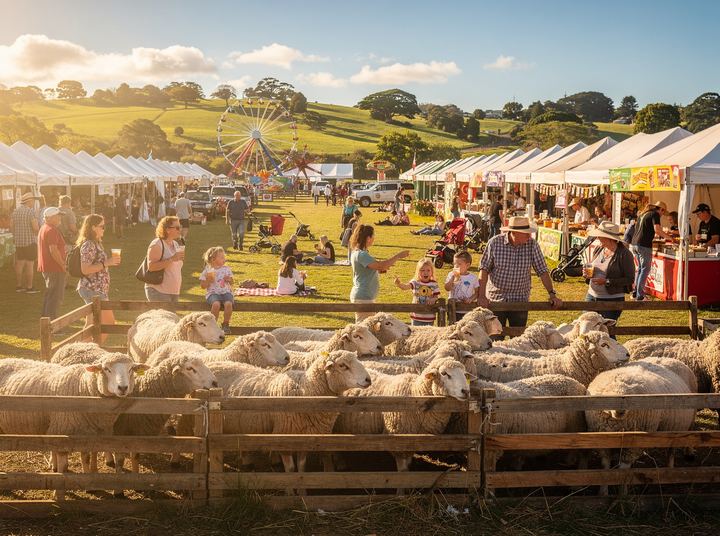
A survey of 600 visitors to a regional A&P show found that:
- 64% of the visitors bought something to eat.
- 37% of the visitors bought something to eat and went on a ride.
- 19% of the visitors did not buy anything to eat, but did go on a ride.
Calculate the number of these 600 visitors who did not buy anything to eat and did not go on a ride.
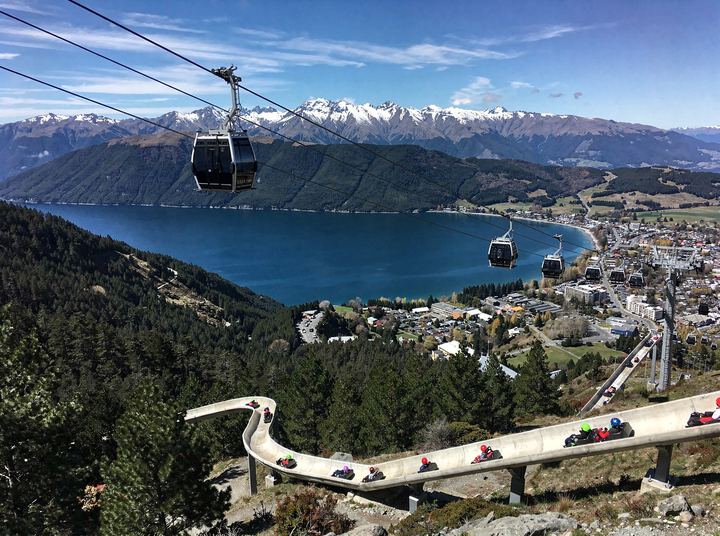
A tourist attraction has three activities: a luge, a gondola ride and mountain-bike trails. Each ticket is for one activity. On one day in January it sold 800 tickets.
- 500 of the tickets were adult tickets. 320 of these were for the luge, and the rest were split evenly between the gondola and the bike trails.
- The other tickets were child tickets. 100 of the child tickets were for the gondola. Of the remaining child tickets, 70% were for the luge and the rest were for the bike trails.
One of the tickets for the bike trails is chosen at random. Calculate the probability that it was a child ticket.
A community garden grew 300 tomato plants last summer. Some were watered by sprinklers (from above) and the rest by drip lines (at the base). The garden recorded which plants got blight, a disease that spreads on wet leaves.
- 100 of the plants were watered by sprinklers.
- 50 of the plants got blight.
- 30 of the plants that got blight had been watered by sprinklers.
The garden coordinator claims that a plant watered by sprinkler is at least twice as likely to get blight as a plant watered by drip line.
Does this data support the claim? Use calculations and statistical reasoning to support your answer.
A sports shop sold 300 pairs of running shoes in March.
- 60 of the pairs were bought online, and the rest were bought in the store.
- 54 of the pairs were returned. 18 of these had been bought online.
Is a pair of running shoes bought online more likely to be returned than a pair bought in the store? Use calculations and statistical reasoning to support your answer.
A water-safety survey asked 600 Year 8 students whether they could swim 200 metres without stopping. The eikosogram shows whether each student's school has its own swimming pool, and whether the student could swim 200 metres. In an eikosogram, the area of each rectangle is in proportion to the probability of that combination.
(a) Write down the probability that a student whose school does not have its own pool could swim 200 metres.
(b) What evidence is there from the survey that students whose school has its own pool are more likely to be able to swim 200 metres than students whose school does not? Support your answer with statistical reasoning, with reference to sampling variation.
A study followed 500 pet cats in an Invercargill suburb for one month. It recorded whether each cat wore a bell on its collar, and whether it brought home at least one bird. The study found that:
- 40% of the cats wore a bell.
- 6% of all the cats wore a bell and brought home a bird.
- 15% of all the cats did not wear a bell and brought home a bird.
How many times as likely is it that a cat with a bell brought home a bird, compared with a cat without a bell? Interpret your answer in context.
A phone app listens to a bird singing and names the bird. A bird expert tested the app on 150 recordings of three native birds: tūī, bellbird (korimako) and fantail (pīwakawaka). The table compares the bird that was actually singing with the app's answer.
| App's answer | |||
|---|---|---|---|
| Actual | Tūī | Bellbird | Fantail |
| Tūī | 52 | 6 | 2 |
| Bellbird | 20 | 27 | 3 |
| Fantail | 1 | 2 | 37 |
Comment on how well the app identifies each of the three birds. Support your answer with at least two calculations.
A community group planted 400 native plants along a stream bank: mānuka, harakeke (flax) and kōwhai. A year later, they checked which plants were still alive.
- 180 of the plants were mānuka and 120 were harakeke. The rest were kōwhai.
- 95% of the mānuka were still alive.
- 12 of the harakeke had died.
- 45 of the 400 plants had died altogether.
One of the plants that had died is chosen at random. Calculate the probability that it was a kōwhai.
A survey of homes in a Central Otago town recorded how each home is mainly heated, and whether it has ceiling insulation.
- 50% of the homes are heated mainly by a heat pump and 30% mainly by a wood burner. The rest are heated some other way.
- 66% of the homes have ceiling insulation.
- 40% of all the homes are heated mainly by a heat pump and have ceiling insulation.
- 18% of all the homes are heated mainly by a wood burner and have ceiling insulation.
(a) A home that is heated mainly by a wood burner is chosen at random. Calculate the probability that it has ceiling insulation.
(b) The council plans to visit 510 homes in the town that do not have ceiling insulation. Approximately how many of these 510 homes would you expect to be heated mainly by a wood burner?
A riding school offers one-hour and two-hour lessons for beginners. The table shows its last 400 beginners: the length of their lesson, and whether they rode a full lap of the arena on their own during the lesson.
| Rode a full lap | |||
|---|---|---|---|
| Lesson | Yes | No | Total |
| Two hours | 90 | 60 | 150 |
| One hour | 125 | 125 | 250 |
| Total | 215 | 185 | 400 |
(a) Calculate the probability that a randomly chosen beginner from this group rode a full lap of the arena on their own.
(b) The riding school's website claims that beginners who book a two-hour lesson are 50% more likely to ride a full lap on their own than beginners who book a one-hour lesson. Does this data support the claim? Use calculations and statistical reasoning to support your answer.
A conservation trust monitored 250 toutouwai (North Island robin) nests in a forest over three breeding seasons. Part of the forest has pest control (traps for rats and possums); the rest does not. The trust found that:
- 20 of the 100 nests in the part with pest control failed (no chick left the nest)
- 75 of the 150 nests in the part without pest control failed.
The trust claims that a nest in the part with pest control is 60% less likely to fail than a nest in the part without pest control.
Does this data support the trust's claim? Use calculations and statistical reasoning to support your answer.
A recycling plant uses a machine to sort the items on a conveyor belt. Items that the machine decides are recyclable are sent to be recycled; all other items are sent to landfill.
Staff checked 200 items by hand after the machine had sorted them. The table shows the results.
| Actually recyclable? | |||
|---|---|---|---|
| Sent to | Yes | No | Total |
| Recycling | 132 | 24 | 156 |
| Landfill | 8 | 36 | 44 |
| Total | 140 | 60 | 200 |
(a) Calculate the proportion of these 200 items that the machine sorted correctly.
(b) The plant's goal is for the machine to sort at least 90% of items correctly.
Comment on the effectiveness of the machine in sorting the items. Support your answer with at least one calculation.
On a hot day at a Bay of Plenty beach, lifeguards asked 450 beachgoers whether they had worn sunscreen that day, and whether they had got sunburnt.
- 400 of the beachgoers had worn sunscreen.
- 60 of the beachgoers had got sunburnt.
- Of the beachgoers who had not worn sunscreen, 20 had got sunburnt.
A beachgoer looks at the results and says:
"Two-thirds of the people who got sunburnt had worn sunscreen. So sunscreen doesn't protect you from sunburn."
(a) Show that the beachgoer's "two-thirds" figure is correct.
(b) Does this data support the beachgoer's conclusion that sunscreen doesn't protect you from sunburn? Use calculations and statistical reasoning to support your answer, and explain why the beachgoer's "two-thirds" figure is misleading.
A gym looked at the 400 people who joined it last year. For each member, it recorded the month they joined, and whether they were still going to the gym at least once a week six months later ("stopped" means they were no longer going at least once a week). The eikosogram shows the results. The area of each rectangle is in proportion to the probability of that combination.
(a) Write down the probability that a member who joined in January had stopped going six months later.
(b) Complete the table of counts for the 400 members.
| Still going | Stopped | Total | |
|---|---|---|---|
| Jan | |||
| Other months | |||
| Total | 400 |
(c) The eikosogram below shows the same data with the two factors swapped. Complete its six missing values.